|
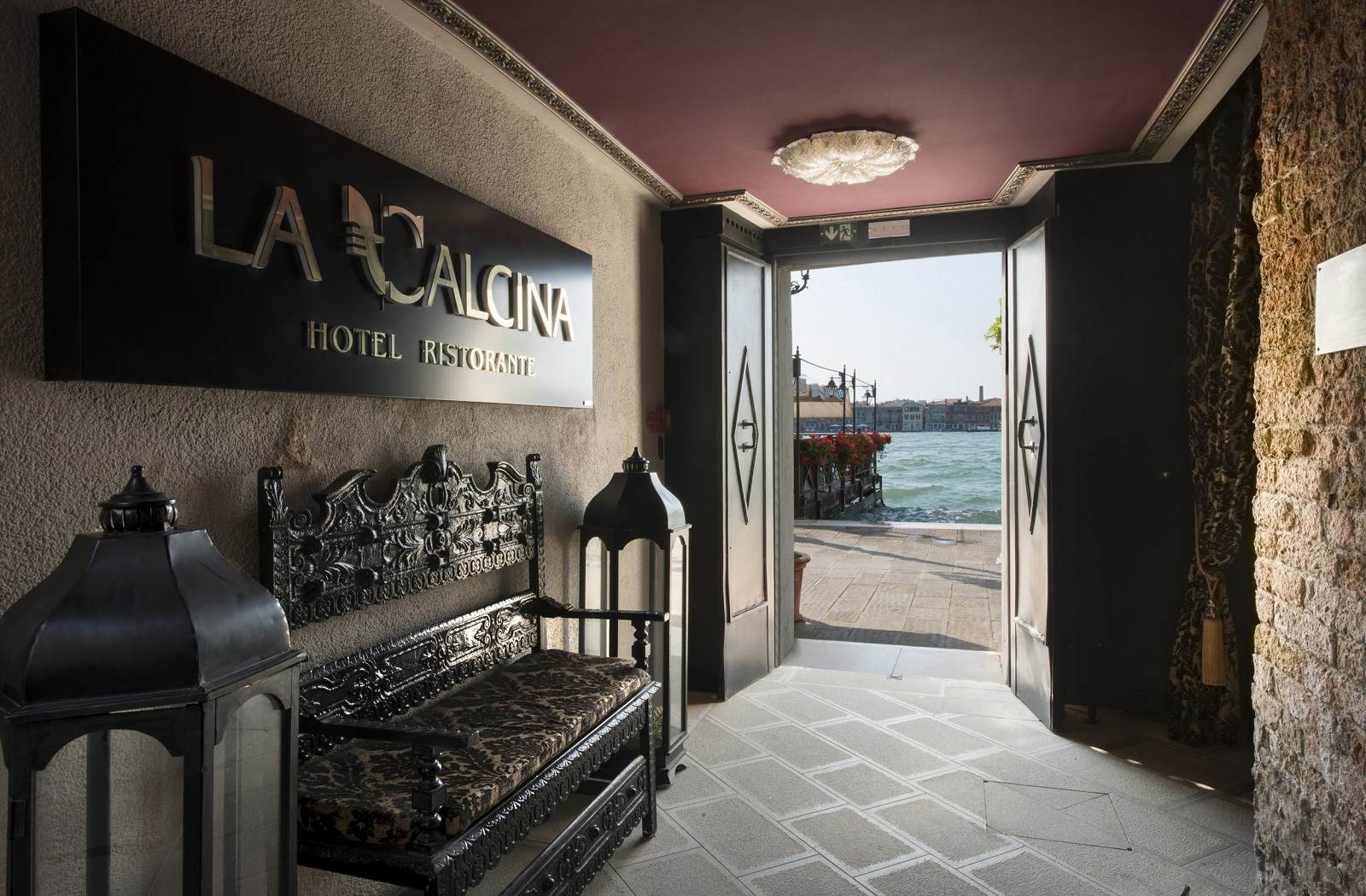
For as long as there has been a lodging place here, once an inn and now a hotel, it has been called
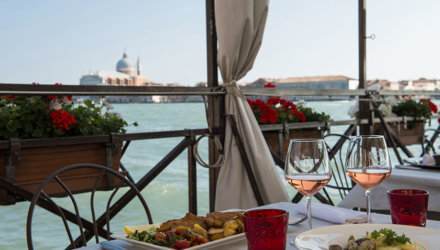
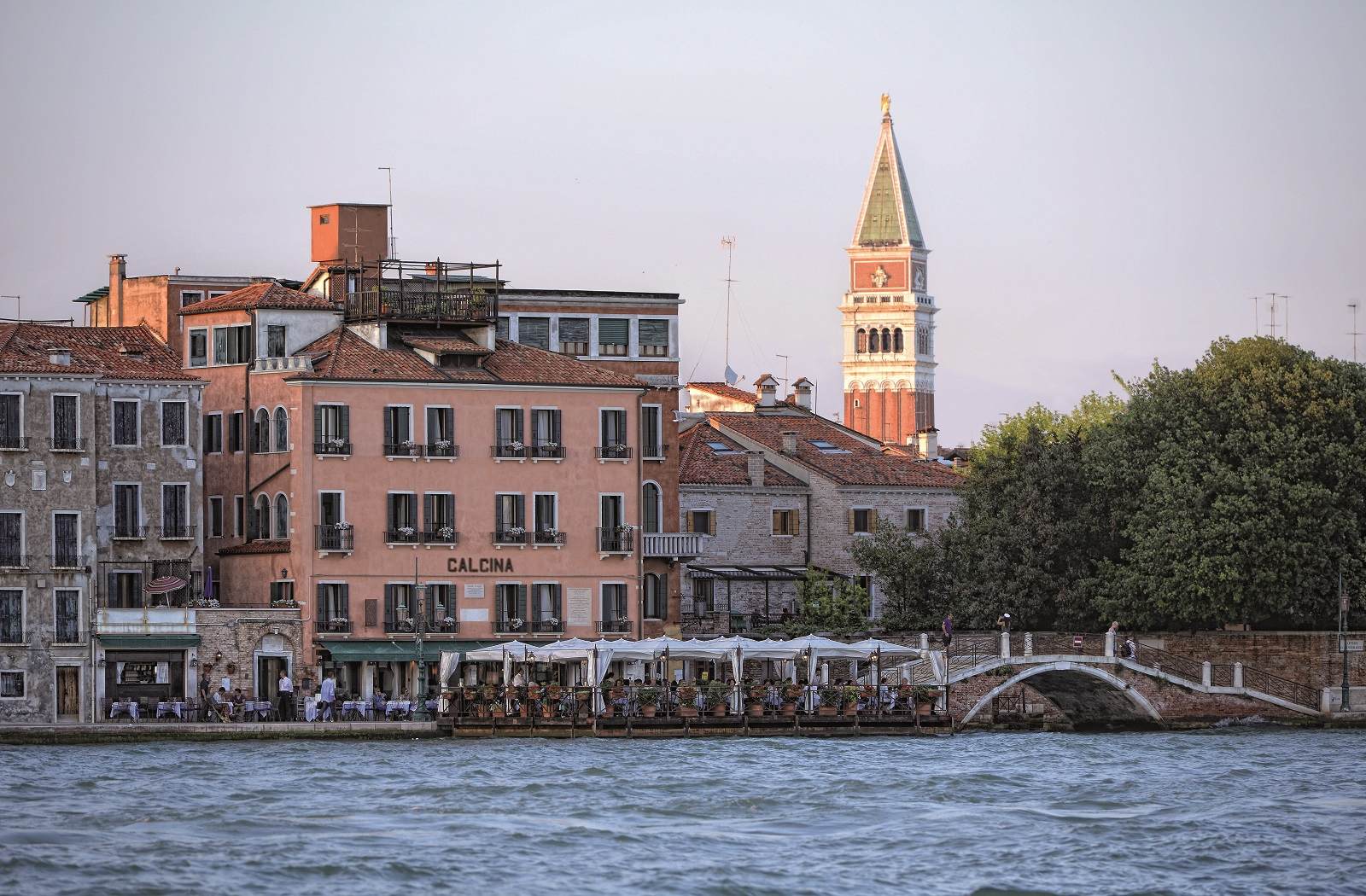
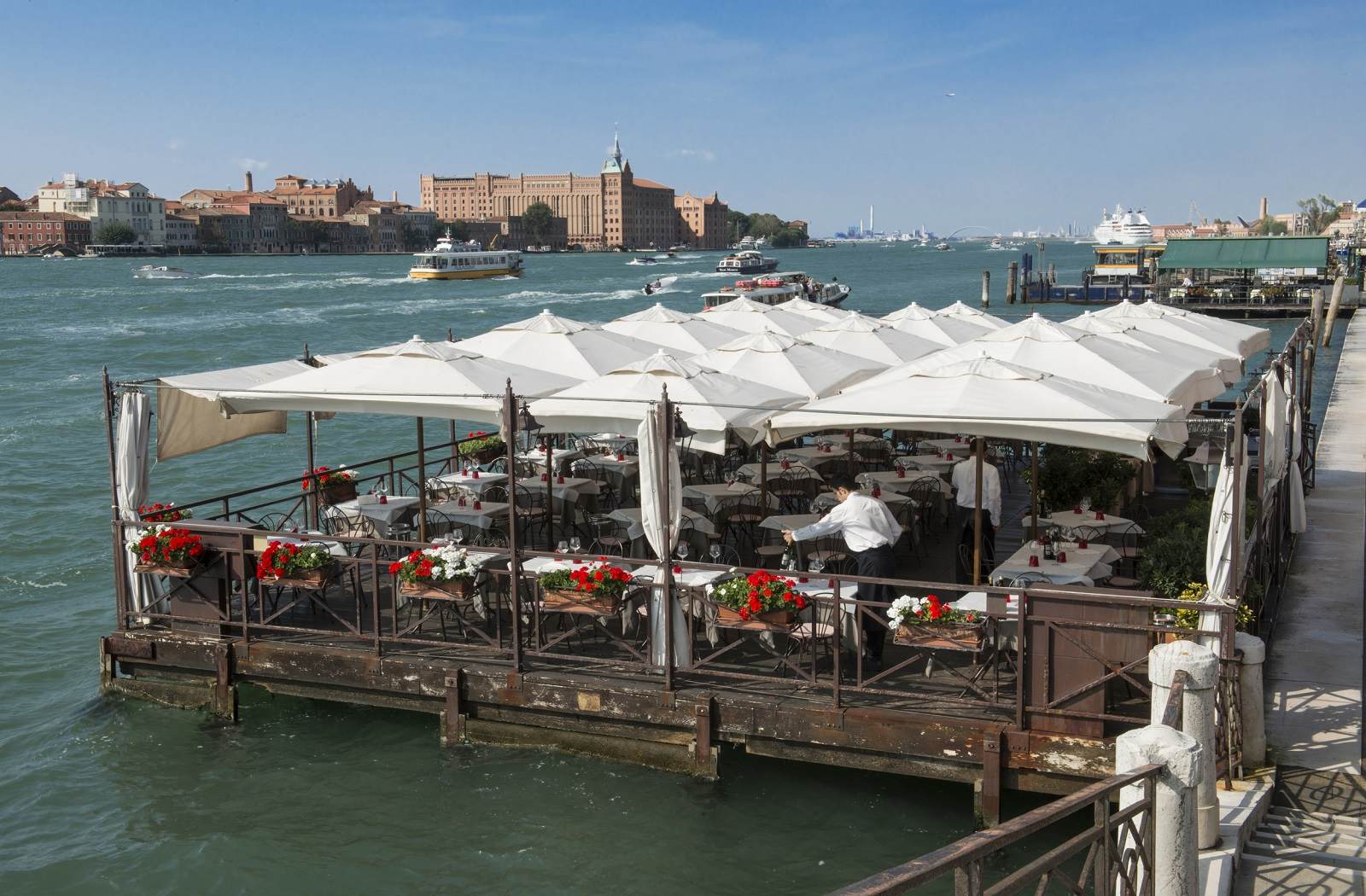
"La Calcina [The Lime House]. As the old photograph shows, the Café was also called La Calcina". It was later named "Vapore [Steam]" and "Cucciolo [Puppy]". Today it is called "La Piscina [The Pool]". Regardless of the different names, they all refer to the same place, a historical site in Venice on the Zattere promenade, at the foot of the Calcina Bridge.
According to a contemporary source from the late 17th century, the center for lime production once stood on this spot, with firing kilns and the lime sellers storehouses.
Boats laden with lime and other stones once passed back and forth under the Calcina Bridge, built in 1840.
As the stone plaque above building number 782 shows, this was the house where Apostolo Zeno, the imperial poet laureate and precursor to Metastasio lived and died, in 1750.
In his manuscripts in the Marciana Library, Rossi describes the Calcina Café as a place frequented by various bohemian artists: the Istrian Bortolo Gianelli, Antonio Zona, Ippolito Caffi, L. Borro, Dom. Fabris, Andrea Scala, the Ghedina brothers, and Francesco Maria Piave, who wrote the librettos for some of Giuseppe Verdi's most famous operas.
From February 13 to May 23, 1877, John Ruskin stayed at the Calcina Pension; other guests of the Pension include the German scholar Gustav Ludwig and the writer and essayist André Suarès.
|
 |
 |
|
We still have in our possession the original receipt issued to him in November 1902 when he was writing his "Voyage du Condottiere".
The French writer Buisine, in his book Ciels de Tiepolo, describes waking up in a room in the Calcina and cites another aficionado of the inn, Henry de Régnier.
A photograph dating from 1909 depicts Marie de Régnier and Jean Louis Vandoyer sitting on the terrace of what was then called the Vapore.
On March 14, 1912, Rainer Maria Rilke wrote a letter from Ponte Calcina Zattere 775 addressed to the Princess Marie von Thurn und Taxis-Hohenlohe.
In 1966, Giuseppe Berto, the great writer from Mogliano-Veneto, writes these words in his novel "La cosa buffa":
"In those mid-winter days, although Antonio went every sunny afternoon to sit on the Zattere café terrace,
which is to say, a place that in no way could be thought of as unpleasant, and, in fact, cheered up by the paucity of beautiful things that are to be found in a city...".
Today the Café is called La Piscina to preserve the memory of an authentic piece of Venetian life: the old seaside resort called The Passoni Pool," a sporting center for swimming and water polo that as late as the 1960's was also a popular gathering and leisure place for many Venetians.
|
|